
Coming Soon
Mushrooms
Lions mane, reishi, cordyceps: what the literature actually supports, and what the pantry holds in reserve.
Science in the Pantry · No edition yet
Insights
Evidence, frameworks, and mindset, organized around the three pillars. Editable from /content; v1 ships with seed posts.
Each track folds and unfolds, so the index stays calm as the library grows. Open a track to read its editions.
Evidence-graded field notes on the newest fueling science reaching the WorldTour peloton before it reaches age-group racing, written for the athlete who wants to know before making the shift.
The modifiable obstacles that quietly erode the returning masters athlete, mapped in four clusters and graded against primary literature. The field guide is free; the cluster deep-dives publish to members.

The full map
Seventeen modifiable barriers that quietly erode the returning masters endurance athlete, grouped into four clusters and graded against primary literature. The free field guide maps the territory. Each cluster then becomes its own deep-dive edition, reserved for members as it publishes.
Sleep and circadian. Sleep is where adaptation is paid for. This cluster covers the four ways the recovery account gets drained: too little sleep, broken sleep, a clock pushed out of phase, and the airway that stops it being restorative at all.
Nutrition and energy. Endurance is an energy problem before it is anything else. This cluster covers chronic underfueling, the protein that masters athletes consistently miss, the two micronutrients that decide oxygen delivery and recovery, and the modern diet that disturbs the gut underneath it all.
Training stress. The training itself becomes a barrier when its load is mismanaged. This cluster covers doing too much, doing too little of the right kind, training that never varies, and the one recovery-day habit that silently undoes a hard session.
Behavior and environment. The hours outside training carry their own load. This cluster covers chronic stress and its allostatic cost, hydration, the sedentary day that wastes the morning session, the painkiller that blunts adaptation, and the heat, air, and altitude the body has to absorb.
Four further barriers are scoped for later editions: caffeine dependence, tobacco and nicotine, cold-water immersion timing, and added-sugar load.
A periodised, evidence-graded walk through the endurance training year, one phase at a time, written for the returning masters athlete.

The track is complete: Adaptation, Volume Build, Capacity and Threshold, Race-Specific, and Peak and Taper. Five editions, one continuous argument, from the first rebuilt aerobic base to the final sharpening before a race.
Science-anchored synthesis of the cellular and physiological systems that decide endurance performance, evidence-graded across primary literature.

Nutrition, fasting, and the science of performing now while building a longer, healthier life: the trade-offs read straight from the primary literature.

Ingredient-led field notes. Each edition takes one item from the pantry — its science, its place in training and recovery, and its part in the comeback. Less manual, more notebook.
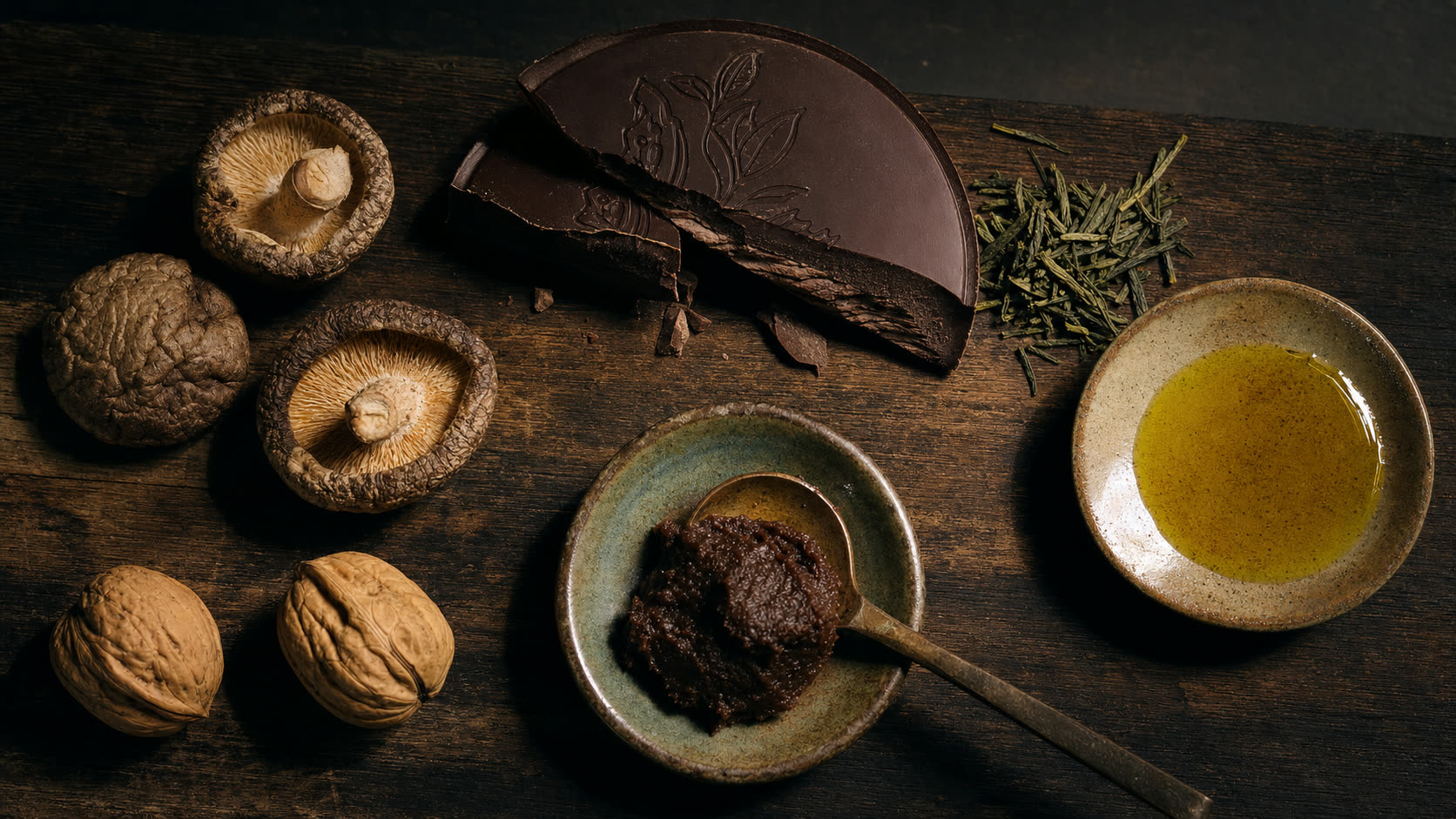
Lions mane, reishi, cordyceps: what the literature actually supports, and what the pantry holds in reserve.
Science in the Pantry · No edition yet

Cacao flavanols, theobromine, and the case for dark chocolate as a training-day staple, not a treat.
Science in the Pantry · No edition yet
L-theanine, EGCG, and the calm-alert state that holds up across long workdays and longer training blocks.
Science in the Pantry · No edition yet
Miso, kimchi, kefir, and koji: the umbrella topic for living foods, gut microbiota, and slow-built flavor.
Science in the Pantry · No edition yet
Polyphenol counts, harvest dates, and why a single bottle in the pantry rarely earns its keep.
Science in the Pantry · No edition yet
Beetroot, eggs, sourdough, salt: the shortlist of ingredients in line for their own edition.
Science in the Pantry · No edition yet
Frameworks and identity for the founder-athlete: the outsider edge, the discipline of the build, and why the fittest founders win.