The Human Engine
The mitochondrion: the cellular engine that decides every endurance race
June 21, 2026 · 8 min preview

The Human Engine Series, No.01 . Opening edition . Premium preview
The mitochondrion is the organelle that produces almost all of the ATP an endurance athlete spends across a race, and almost every variable that decides long-course performance, VO2max, fat oxidation, lactate kinetics, fatigue resistance, recovery rate, and the late-race wall, resolves into one of four mitochondrial properties: how many there are, how densely their inner membranes are folded, how well they fuse, divide and recycle themselves, and how well the rest of physiology supplies them with substrate, oxygen, and a stable internal environment. This reference is the opening edition of a new editorial track that takes the cellular and physiological systems behind endurance performance one at a time. It synthesizes 225 peer-reviewed sources across ten conceptual pillars, grades every quantitative claim by evidence tier, and steelmans every contested finding against its strongest counter-evidence before rendering a synthesis judgment. This preview opens the headline findings of the full edition. The complete reference sits behind membership. Built on evidence, not affirmations.
The verdict, up front
Endurance performance is, at the cellular level, a problem of mitochondrial supply meeting mitochondrial demand. Training builds the supply through two largely separable stimuli: volume expands mitochondrial mass, and intensity improves respiratory function per mitochondrion. Twelve theses, drawn from independently replicated primary literature, organise the science: cristae density is an independent determinant of VO2max, not reducible to volume; the Ironman creates a mitochondrial stress profile with no equivalent in any single-discipline event; heat acclimation is a direct mitochondrial stimulus while altitude is largely hematological; no dedicated mitochondrial supplement has shown an independently replicated performance benefit in trained athletes as of 2026; and the masters reality is a declining biogenesis ceiling against a still-preserved trainability, which shifts the leverage point from adding volume to protecting quality.
Who this is written for
The returning masters athlete, not the young or continuously trained
The prototype reader is the returning masters endurance athlete, typically aged 40 or older, with a meaningful prior history in long-course sport, who has been away from structured training for an extended period and now intends to rebuild toward competition. That framing matters at the mitochondrial level because the masters athlete sits at the precise intersection where the science becomes most consequential and most contested: a biology in which biogenesis capacity has begun to attenuate, mitochondrial DNA mutations are accumulating, hormonal support for OXPHOS gene expression is declining, and recovery kinetics have slowed, set against a training response that, in trained populations, remains remarkably preserved well into the sixties and beyond.
A note on method comes before the science. Mitochondrial biology attracts more confident folklore than almost any other domain in endurance sport: the belief that all training time spent in zone two is uniquely mitochondrial, that ice baths after every hard session are universally helpful, that a long list of branded supplements meaningfully improves trained-athlete performance, that altitude camps are primarily a mitochondrial intervention, and that a single number on a wearable can stand in for organelle-level function. Each is examined honestly here, and where a popular claim outruns its evidence, the correction is stated openly rather than repeated. Every substantive claim is anchored to peer-reviewed primary literature, graded for strength, and kept separate by category, so mechanism, model, measured human outcome, and reasoned masters extrapolation are never silently merged.
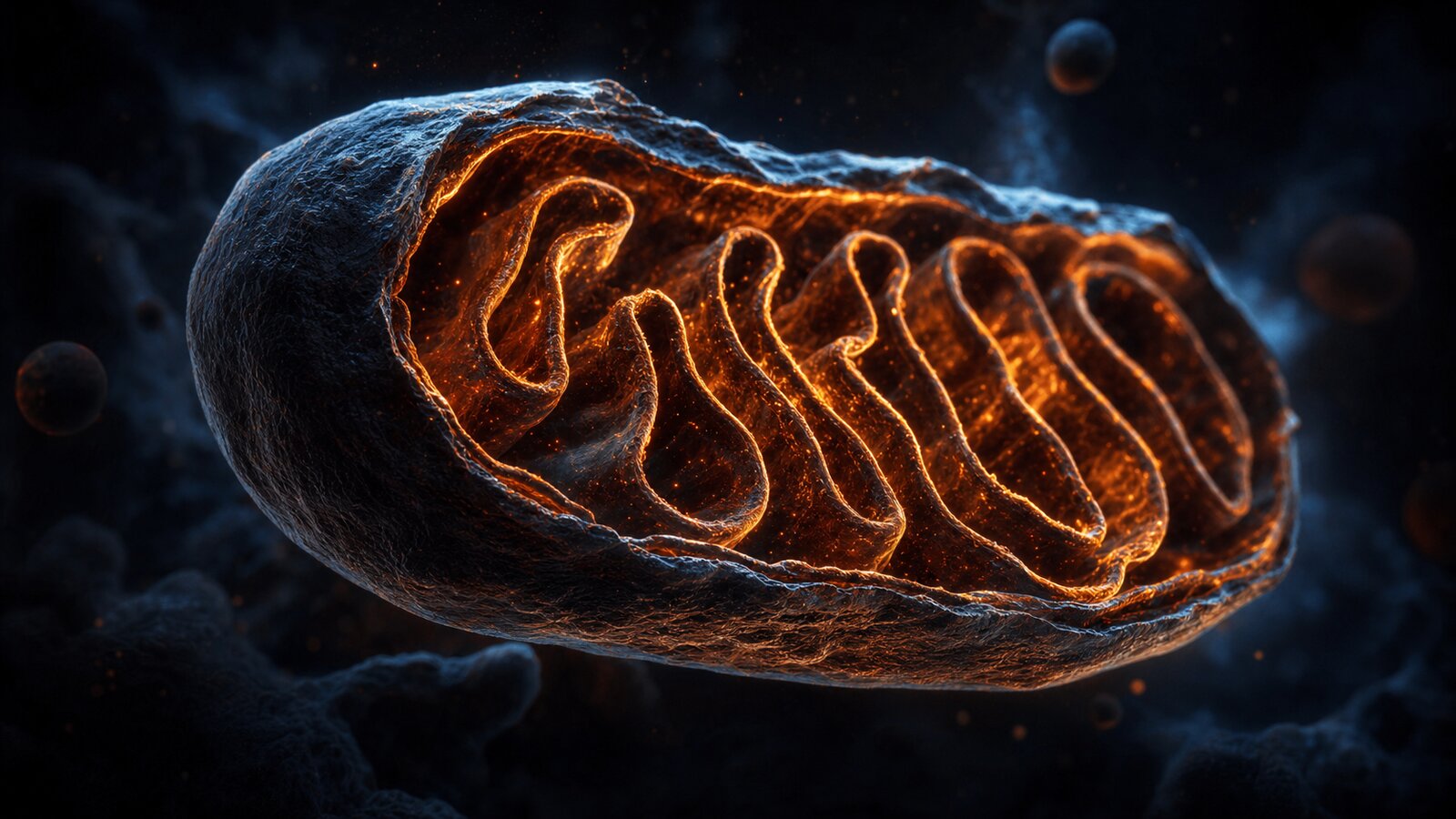
The architecture, and why volume is not the whole story
Cristae density predicts VO2max better than mitochondrial volume
Mitochondria are not uniform ATP factories. The inner membrane is folded into structures called cristae, whose surface area can reach roughly forty times the surface area of the outer membrane in highly trained skeletal muscle, and that folded surface is where the proton-coupled synthesis of ATP actually happens. Cristae are dynamically remodeled in response to training, hormones, and metabolic demand, and their geometry organises the respiratory chain into supramolecular assemblies, the supercomplexes, which channel electrons between complexes faster and with less escape of reactive oxygen species than free diffusion would allow. The most consequential finding of the last decade in this area is that cristae density is a stronger predictor of VO2max than mitochondrial volume in trained human vastus lateralis, and that endurance training increases cristae membrane density by roughly thirty percent. This directly challenges the volume-centric paradigm that dominates popular training discourse and reframes a portion of the trained-athlete adaptation as architectural rather than quantitative.
Sources: cristae density and VO2max in trained human muscle, Nielsen et al. 2017, J Physiol (PMC5407961); supercomplex assembly and respiration, Cogliati et al. 2013, Cell (PMC3790458); supercomplex formation with endurance training in humans, Greggio et al. 2017, Cell Metabolism (10.1016/j.cmet.2016.11.004).

The signals that build mitochondria
PGC-1alpha is the master coactivator, but it is not the only signal
Mitochondrial biogenesis is orchestrated by a transcriptional coactivator called PGC-1alpha, but PGC-1alpha is itself activated by at least four upstream pathways, AMPK, SIRT1, CaMKII, and p38 MAPK, that respond to distinct exercise stimuli. Sprint intervals maximise AMPK and p38 phosphorylation through high glycolytic flux and large calcium transients. Sustained low-intensity work preferentially engages calcineurin-NFAT signaling. Polarized training, which combines low-intensity volume with periodic high-intensity work, exploits all four pathways in complementary phases. No single training zone is uniquely mitochondrial per unit time, and a recent narrative review concluded that the popular framing of zone two as the only mitochondrial zone overstates a coherent low-intensity finding into a categorical claim the evidence does not support. The trained-athlete reality is that mitochondrial volume responds primarily to volume, while respiratory function per mitochondrion responds primarily to intensity, and the two are dissociable enough that overreaching can increase volume markers while reducing per-mitochondrion respiratory capacity by up to twenty percent.
Why no supplement can substitute for the signal
Each of the upstream pathways that converges on PGC-1alpha is engaged by a specific feature of the exercise stimulus: large ATP turnover, calcium transients of a specific shape and frequency, glycogen depletion in working fibres, and the redox shift that follows a hard session. No oral compound recreates this combination. The mitochondrial supplement industry has produced coherent mechanistic stories and positive biomarker signals in older sedentary populations, but no dedicated mitochondrial supplement has demonstrated an independently replicated, double-blind improvement in athletic endurance performance in trained athletes. The Tier 1 toolkit retains its evidence lead by a wide margin.
Sources: pathway convergence on PGC-1alpha and the zone-two framing, Storoschuk et al. 2025, Sports Medicine, on the contested status of zone-two-as-uniquely-mitochondrial; volume versus function dissociation under overreaching, Lundby et al. 2021 (PMID 34110230); supplement evidence summary, AIS/IOC consensus categories applied to mitochondrial compounds across the trained-athlete trial base through 2026.

The Ironman cascade, qualitatively distinct
Four compounding stresses the marathon-times-three heuristic misses
The Ironman is bioenergetically not a long marathon, and the casual equation of one Ironman with three marathons obscures the actual physiology. Across eight hours or more of continuous work, four mitochondrial stress mechanisms compound in a way that no single-discipline event reproduces: glycogen depletion that progressively shifts oxidation toward fats and lowers the upper sustainable power for any given oxygen cost, reactive oxygen species overflow as electron transport runs at high flux for extended periods, thermal uncoupling via the UCP3 protein under heat stress that dissipates a portion of the proton gradient as heat rather than ATP, and eccentric muscle damage in the marathon leg that is initiated under partial glycogen depletion, cardiovascular drift, elevated core temperature, and a plasma free fatty acid milieu that amplifies mitochondrial electron leak. The late-race wall in long-course racing is therefore not a single failure but the convergence of four mitochondrial perturbations whose effects multiply rather than add.
Sources: prolonged exercise, ROS overflow, and mitochondrial electron leak under fatigue, Sahlin et al. 2010, J Appl Physiol (PMC2853199); UCP3, fatty acid handling, and proton leak under heat stress, primary mechanistic literature on UCP3 in skeletal muscle; the post-race mitochondrial repair window, recovery kinetics summarised in the full reference.

Nutrition and supplements, evidence-graded
A short Tier 1 shelf, and a long list of well-marketed compounds that do not perform
Nutrition modulates mitochondrial signaling as directly as training does. Carbohydrate periodization, the deliberate scheduling of selected sessions in a glycogen-depleted state, amplifies PGC-1alpha nuclear translocation and the transcriptional response that follows. Dietary nitrate from beetroot reduces mitochondrial proton leak and lowers the oxygen cost of submaximal exercise by roughly three to five percent in trained subjects. High-fat and ketogenic approaches expand fat oxidative capacity, but constrain glycolytic flux at race-relevant intensities and impair running economy at long-course race pace, and the trained-athlete trial base does not support them as a performance strategy for long-course racing. Of compounds explicitly marketed as mitochondrial, the short evidence-anchored shelf in trained athletes remains caffeine, nitrate, beta-alanine, creatine, and bicarbonate. Urolithin A, MitoQ, and the NAD+ precursors NR and NMN have coherent mechanisms and biomarker movement in older sedentary populations, but no independently replicated performance benefit in trained athletes, and industry funding dominates the positive trials. Exogenous ketones fail to improve performance in meta-analysis.
The honest summary of the supplement aisle
Routine high-dose antioxidant supplementation, particularly vitamin C and vitamin E at gram-level doses around training, blunts the adaptive ROS signal and impairs the training response itself. That is among the most counterintuitive and best-replicated findings in the area: the same compound that protects a cell from oxidative damage in a dish can blunt the adaptation the athlete is paying for in the gym. Reactive oxygen species at physiological exercise doses are required signals, not damage to be neutralised, and the implication is to leave training-day antioxidant supplementation alone unless a specific clinical indication is being treated.
Sources: nitrate, proton leak, and oxygen cost, Larsen et al. 2011, Cell Metabolism (PMID 21284982); the AIS/IOC supplement categorization for trained athletes through 2026; antioxidant blunting of training adaptation, the consensus mitohormesis literature; exogenous ketones meta-analysis (Hedges g = 0.136, non-significant).

The masters reality, reasoned across the evidence
Declining biogenesis, preserved trainability, and a shift from adding volume to protecting quality
Aging impairs mitochondrial quality control through several converging mechanisms: mitochondrial DNA mutations accumulate in long-lived post-mitotic tissue, baseline PGC-1alpha expression declines, NAD+ availability for the SIRT1 and SIRT3 deacetylases falls, mitophagy flux is impaired so damaged mitochondria are cleared more slowly, and the supporting hormonal milieu (growth hormone and IGF-1, testosterone, estrogen) progressively shifts in directions that reduce OXPHOS gene expression. The honest cross-sectional reality is that masters athletes preserve mitochondrial content and function far better than sedentary peers, but survivor bias and self-selection inflate the cross-sectional estimates of trainability, and VO2max in even sustained-training masters athletes declines at roughly half a percent to one percent per year after age sixty. The shift in training leverage that follows is not a counsel of despair: it moves the high-value question from how much more volume the athlete can accumulate to how well they can protect mitochondrial quality through adequate mitophagy flux, hormonal optimization, an energy availability above the REDs threshold, sleep-protected circadian NAD+ cycling, and a deliberate handling of psychological stress as an anti-allostatic intervention.
Why the differential matters more with age
Overtraining syndrome, long COVID, and Relative Energy Deficiency in Sport share a mitochondrial biogenesis suppression phenotype and present with the same clinical pattern: unexplained fatigue, exercise intolerance, blunted training response, and elevated resting lactate. The masters athlete is at higher risk for each, and the impulse to push through poor performance with additional load is the most dangerous clinical error in this differential. The first response to a sustained, unexplained drop in performance in a returning master is rest and investigation, not a heavier block.
Sources: VO2max decline with age in trained populations, Burtscher et al. 2022, Int J Environ Res Public Health (PMC9517884); the molecular ledger of aging and the biogenesis-mitophagy axis, primary mechanistic literature reviewed in the full reference; the OTS / long COVID / REDs convergence on suppressed biogenesis, consensus reviews and primary mechanistic studies summarised in Chapter 9.
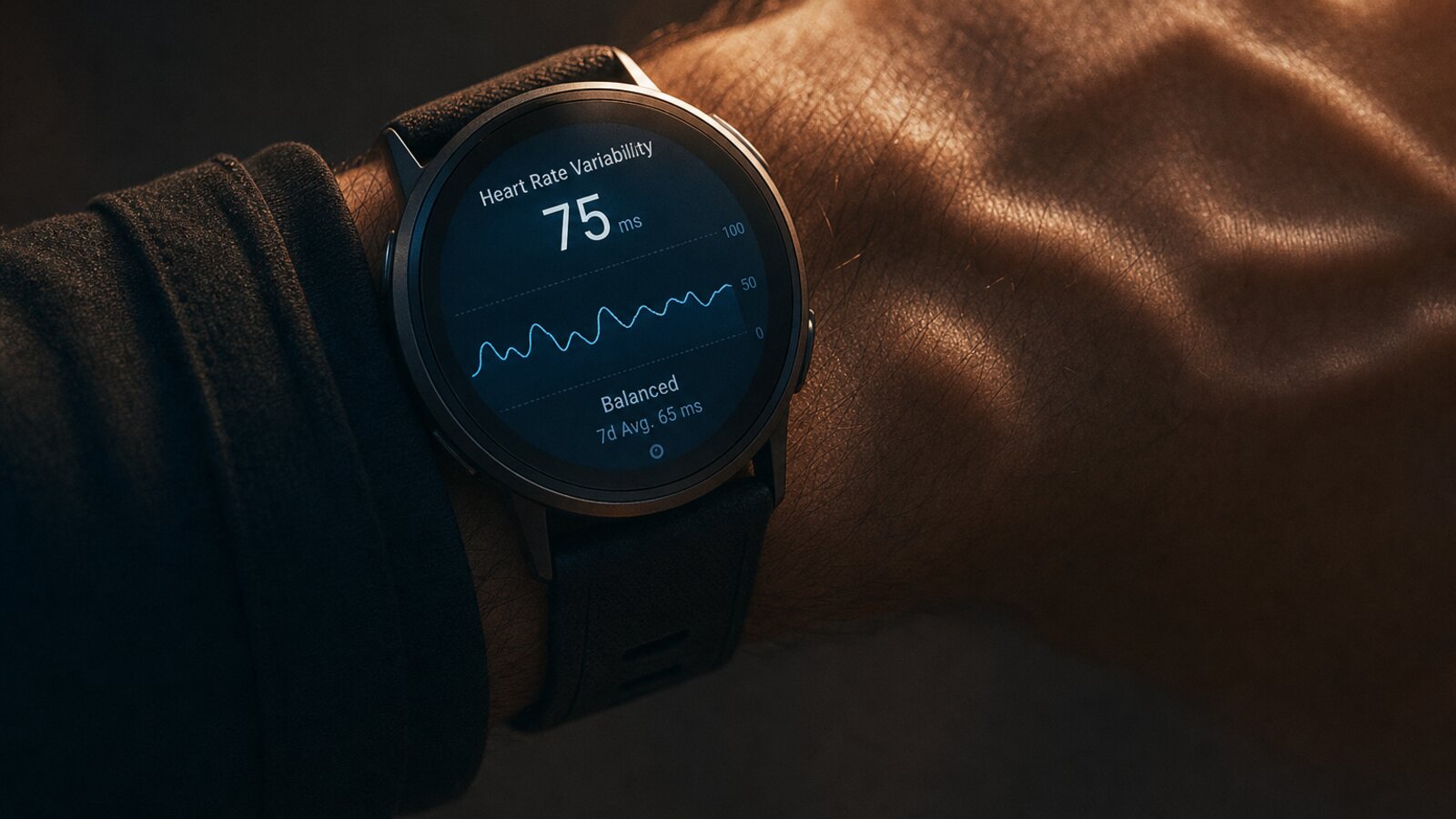
What an athlete can actually measure today
Gold standards stay in the lab; field tools are honest about what they cannot infer
Measurement of mitochondrial function requires matched tools and interpretive discipline, and the headline reality is that organelle-level inference is not yet a wearable problem. The gold standard remains muscle biopsy with Oroboros high-resolution respirometry, which directly measures mitochondrial oxygen flux ex vivo and is accessible only in research contexts. Phosphorus magnetic resonance spectroscopy offers the most mechanistically grounded non-invasive proxy, with phosphocreatine recovery kinetics correlating with biopsy-derived respiration at roughly 0.66 to 0.72 in trained subjects. Near-infrared spectroscopy provides regional muscle oxygenation kinetics that track training status. In the field, the practical evidence tools remain lactate profiling for the intensity domains, serial VO2max testing for ceiling shifts, and structured training-load and HRV monitoring for readiness. Consumer wearables cannot estimate mitochondrial function with mechanistic specificity, and the honest framing of their value is readiness management, not organelle-level inference. The frontier, narrowing the gap between research measurement and field-accessible monitoring, is the convergence of biopsy, phosphorus MRS, NIRS, and emerging mitokine biomarkers (GDF15, FGF21, humanin).
Members unlock the full edition
The complete reference, the consolidated fact-check ledger, and the booklet
This preview opens the headline findings across the ten conceptual pillars of the reference. The premium No.01 edition of The Human Engine is the full evidence reference for the mitochondrion in endurance sport: the architecture and dynamics of the organelle; the bioenergetics of endurance exercise from substrate crossover to the lactate shuttle to W-prime; the full biogenesis pathway map and the comparative efficacy of training modalities; the Ironman cascade in detail with the four compounding mechanisms graded; nutrition and the supplement aisle evaluated by AIS/IOC category against the trained-athlete trial base; the environmental modulators of altitude, heat, cold, and sleep separated by pathway; the masters athlete decline curve and the menopause inflection point; the overtraining / long COVID / REDs differential with management priorities; the measurement and diagnostics stack from biopsy to wearables; and a closing synthesis of the twelve mitochondrial theses that survive steelmanning. It includes a consolidated fact-check ledger that retires the most durable folk claims in the area. Members also receive the designed, paywall-grade 83-page PDF booklet that opens The Human Engine track.
- The full architecture of the organelle, from cristae geometry to respiratory supercomplexes to the OPA1-governed dynamics that decide coupling and electron leak
- The complete biogenesis pathway map: PGC-1alpha, TFAM, NRF1/NRF2, mitochondrial fission and fusion, mitophagy, and the comparative efficacy of every major training modality
- The full Ironman cascade: glycogen depletion, ROS overflow, UCP3 thermal uncoupling, and the eccentric damage of the marathon leg, with the post-race repair timeline
- Nutrition and supplementation evaluated by AIS/IOC category: the Tier 1 shelf, the contested middle, the marketing-driven tail, and the WADA status of every compound considered
- Environmental modulators separated by mechanism: altitude as hematology, heat as a direct mitochondrial stimulus, cold water immersion as a context-dependent tool, and sleep as a transcriptional clock
- The masters reality in full: the molecular ledger of aging, the menopause inflection point, the differential against overtraining, long COVID, and REDs, and the leverage point that protects quality
- The measurement and diagnostics stack from biopsy and phosphorus MRS to lactate profiling and wearables, the twelve mitochondrial theses, the consolidated fact-check ledger, and the 83-page PDF booklet that opens The Human Engine track
Build the engine through training that engages the full set of biogenesis signals, not one zone alone. Protect its quality through nutrition, environment, sleep, and recovery that respect the architecture rather than chase the latest compound. Measure what can be measured honestly and read the rest as readiness, not as the organelle. The mitochondrion is the cellular engine of endurance, and the discipline of training it well is the same discipline that builds a career: respect for the system as it actually works, not as folklore prefers it. The fittest founders win.
The through-line of the reference
Twelve theses, one organelle, ten pillars
The reference is organised around twelve theses that survive steelmanning and multi-study replication, and they are best read as one continuous argument rather than ten separate topics. Architecture predicts function. Mitochondrial volume and respiratory function per mitochondrion are dissociable and require separate training stimuli. The lactate shuttle reframes lactate as fuel and signal, not waste. Reactive oxygen species at physiological doses are required adaptive signals, not damage. The Ironman is qualitatively distinct from any single-discipline event in the mitochondrial stress profile it produces. Heat acclimation is a direct mitochondrial stimulus while altitude is largely hematological. Aging shifts the leverage point from adding volume to protecting quality. Menopause is a mitochondrial inflection point through the loss of estrogen's direct transcriptional regulation of OXPHOS subunits. Overtraining syndrome, long COVID, and REDs share a biogenesis suppression phenotype that requires rest, not more load. No dedicated mitochondrial supplement has cleared the trained-athlete performance bar through 2026. And the measurement stack is converging, slowly, on what an athlete in the field can actually know about the organelle. The through-line is one discipline: respect the system as it works, not as it is marketed.
Colophon and method
This preview summarizes the high-level findings of IronPreneur Human Engine No.01, the opening edition of a new editorial track. It is a synthesis of 225 peer-reviewed primary sources across ten conceptual pillars, with strict separation maintained between mechanistic and model-based results and measured human outcomes, between general-population and trained-athlete data, and between findings in young or elite athletes and reasoned extrapolations to the returning masters athlete. Nothing here is medical advice. Implementation, and any underlying condition, belongs with a qualified clinician. The full reference, the consolidated fact-check ledger, and the 83-page designed booklet are available to members.
Selected sources: Nielsen et al. 2017, J Physiol (PMC5407961); Cogliati et al. 2013, Cell (PMC3790458); Greggio et al. 2017, Cell Metabolism (10.1016/j.cmet.2016.11.004); Storoschuk et al. 2025, Sports Medicine; Lundby et al. 2021 (PMID 34110230); Brooks et al. 2022, Exp Mol Med (10.1038/s12276-022-00802-3); Sahlin et al. 2010, J Appl Physiol (PMC2853199); Larsen et al. 2011, Cell Metabolism (PMID 21284982); Burtscher et al. 2022, Int J Environ Res Public Health (PMC9517884). The full reference carries the complete 225-source citation set across ten pillars. Prepared June 2026. Built on evidence, not affirmations.
Want the room where this gets put into practice?